The history
The monks, the monastery and the horses of Jerez
How a Carthusian monastery beside the Guadalete came to breed horses, and how the line survived invasion, expulsion and the loss of its owners.
Book the Carthusian horse visit ↗Quick answer
The Carthusian monks of Jerez began breeding horses beside their monastery, the Charterhouse of Santa María de la Defensión, in the late 15th century. They kept the line for centuries. French troops sacked the monastery in 1810, a priest saved some of the stock, and in 1835 the convent's stud farm was dissolved and the horses passed to the state, which owns the farm today.
A monastery by the Guadalete
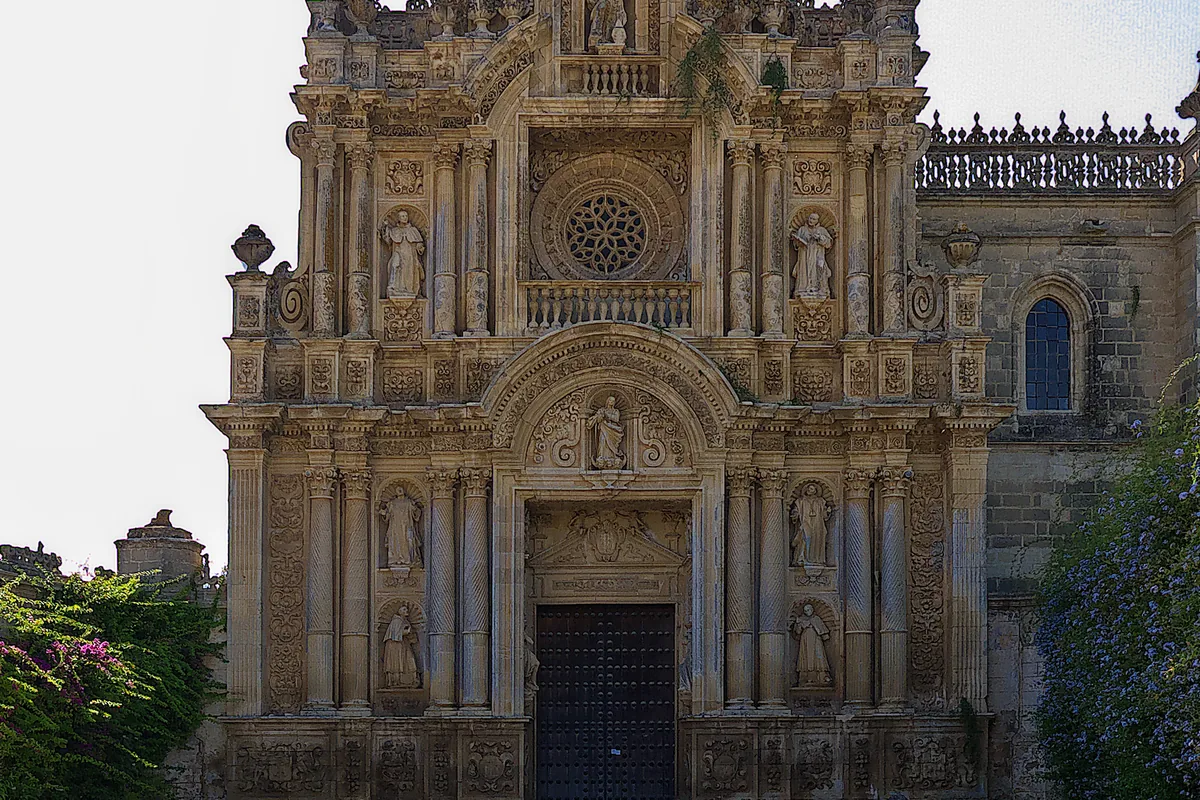
The Charterhouse of Jerez is also called Santa María de la Defensión. Wikipedia says the impulse came from Álvaro Obertos de Valeto, a knight of Genoese descent whom Alfonso X appointed to defend Jerez after its conquest in 1264. With no heirs, he left his fortune for a Carthusian monastery. The site by the Guadalete river was chosen in 1475, and building in Late Gothic style began in the 15th century. Andrés de Ribera began the Renaissance entrance in 1571, and the church façade was remodelled in Baroque style in 1667.
The horses begin
The Ministry of Agriculture says the Carthusian line was first bred in the monastery in the late 15th century, on the dehesa of Fuente del Suero beside it. Wikipedia says the lineage can be traced back to 1476, and that the monks bred and preserved it from at least that year. Spanish Wikipedia describes the monks as breeding horses of great purity at liberty on Fuente del Suero. The farm that visitors tour today stands on that same estate, next to the monastery.
Resisting the crown
English Wikipedia says that over the following century the monks fiercely protected the lineage, resisting royal orders to cross their horses with Neapolitan and Central European breeds. It adds that they did introduce Arabian and Barb bloodlines. The article on Jerez gives the same story more briefly: when the Crown ordered crossbreeding, the monks refused and kept their bloodline for almost 400 years. Wikipedia's Carthusian article adds that a 2006 genetic study found no genetic differences between Carthusian and other Purebred Spanish horses.
French troops, expulsion and a rescue
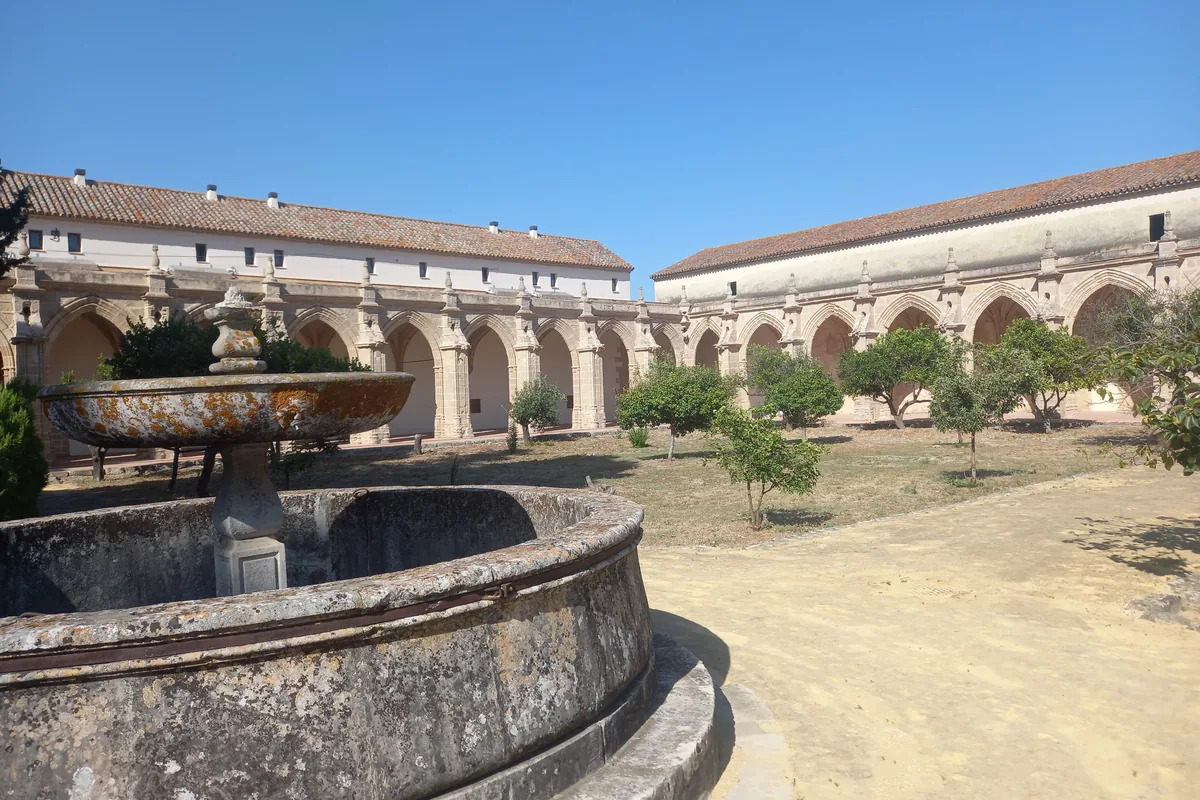
Wikipedia says French troops used the complex as a barracks in 1810 during the Peninsular War, causing heavy damage, and that the monks fled to Cádiz and returned to a sacked site. Spanish Wikipedia says that in 1810 the priest Pedro José Zapata secured about 60 mares and three stallions and hid them in the Breña del Agua, and calls this the basis of the current herd. English Wikipedia notes that some Carthusian horses were later called Zapata horses. In 1835, it says, the convent's stud farm was dissolved and the horses passed to the Spanish state.
The brand that names the stud
The stud's name, Hierro del Bocado, comes from the brand used to mark its animals. English Wikipedia says the original mark of the monks, representing a bell, was replaced in the 18th century by a bit-shaped mark. Spanish Wikipedia credits the Hierro del Bocado to Pedro José Zapata and says it gave the herd its name. The two accounts differ on the date, so this guide does not choose one.
The monastery today
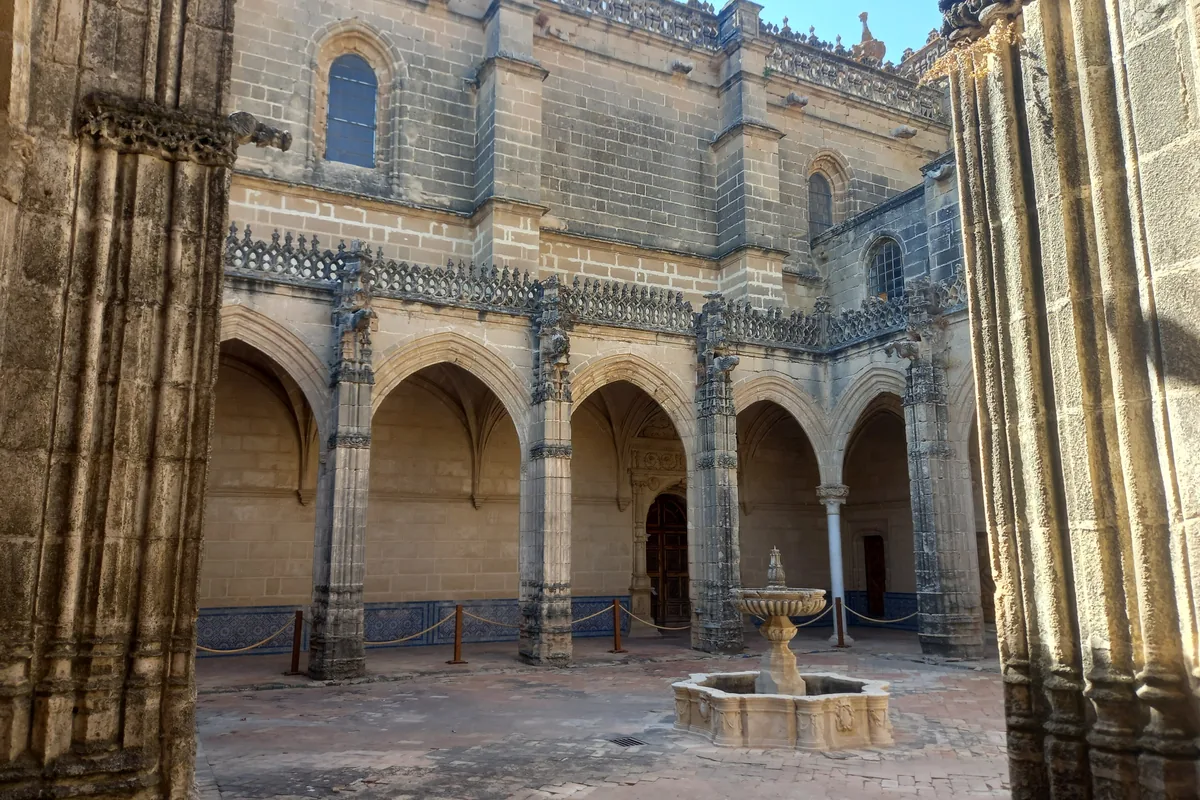
Wikipedia says the Charterhouse became a national monument in 1856, one of the first dozen or so such sites in Spain, and is now listed as a Bien de Interés Cultural. The Sisters of Bethlehem, of the Assumption of the Virgin and of Saint Bruno continue a monastic tradition that the Carthusian fathers kept for more than five centuries. Most of the paintings Francisco de Zurbarán made for the sanctuary are now in the Museo de Cádiz. The stud-farm ticket described on this site covers the horses, not the monastery.
Who this isn't for
Travellers hoping for a tour of monastic rooms and paintings should look elsewhere: the stud-farm ticket is a visit to the farm that grew from the monastery, not to the monastery itself. Check the monastery's own visiting arrangements before you plan around it, because they are a separate matter from this booking.
Read next: What is a Carthusian horse, and what happens at the stud farm?
Frequently asked questions
Who founded the Charterhouse of Jerez?
Wikipedia says the impulse came from Álvaro Obertos de Valeto, a knight of Genoese descent, who left his fortune for a Carthusian monastery. The site was chosen in 1475.
When did the monks start breeding horses?
Spain's Ministry of Agriculture says the breeding began in the late 15th century, and Wikipedia says the lineage can be traced to 1476.
What happened in 1835?
Wikipedia says the convent's stud farm was dissolved that year and the horses passed to the Spanish state and selected private breeders.
Does the stud-farm ticket include the monastery?
The booking page describes a tour of the stud farm and a dressage show. It does not describe a monastery visit.
Sources